 Cornerstone Plumbing
We find it before we open anything up.
A leak you cannot see is still costing you money every hour, and in South Florida it is also feeding mold inside a wall. We locate it with acoustic listening gear, pressure testing and thermal imaging, show you where it is, and then repair the smallest area we can get away with.

By the time we open the ground we already know where the leak is, which is why the hole is the size it is. The locating is the work; the digging is the easy part.
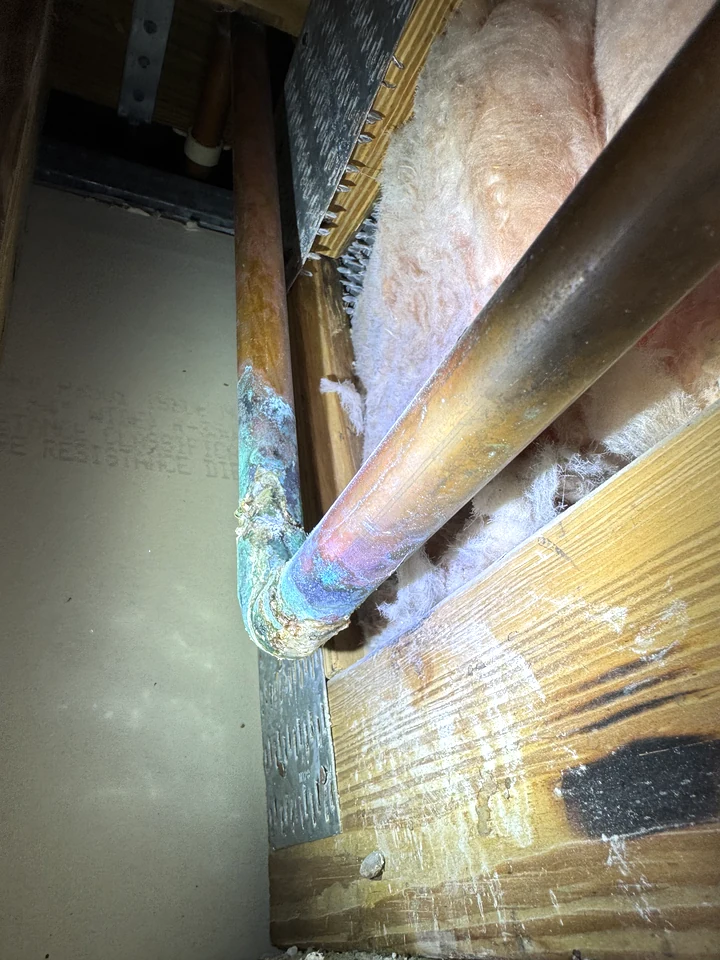
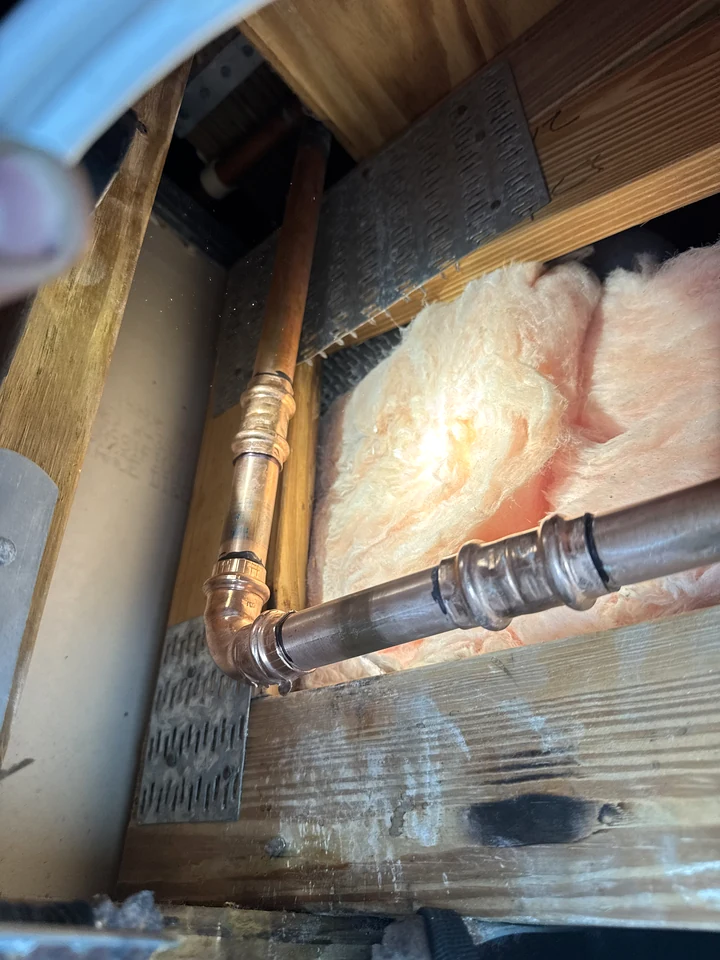
Crust that thick does not form overnight. This joint had been weeping slowly for a long time, soaking the framing around it while the ceiling below still looked fine — which is exactly why the leak had to be located rather than looked for. The repair is a short section of new copper, not the whole run.
A lot of South Florida housing stock runs copper under a concrete slab, and decades of slightly aggressive water eats pinholes through it from the inside. Add a high water table and warm ground and a slab leak stays wet instead of drying out, which is why the first sign is often a smell or a warm tile rather than a puddle. Older buildings in Miami-Dade and Broward also still have galvanized branch lines that rust closed and then split at the threads.
Tracing a hidden leak takes equipment and time, so it carries a diagnostic fee. You get that number on site, before anything gets opened up. Once we know what we are dealing with, the repair itself is quoted flat-rate on site, before any work starts. If a whole line is failing rather than one spot, we will say so rather than sell you the same repair three times.
One call gets you a real plumber, a fixed price, and a job done right. No callbacks, no surprises, no runaround.